

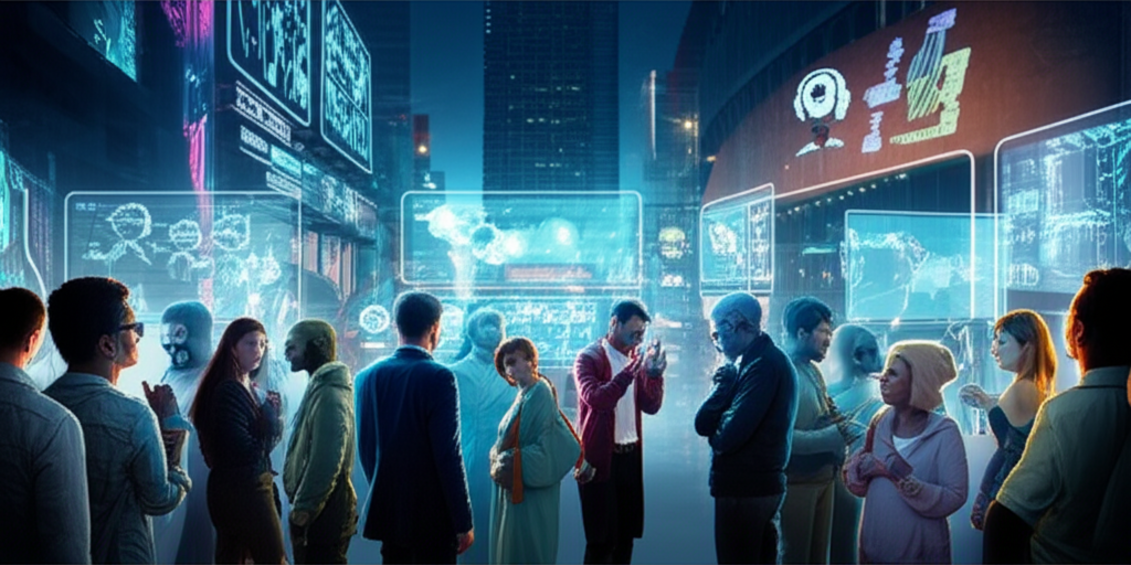
The A.I. Boom Has Found Another Gear. Why Can’t People Shake Their Worries? 🤖⚡
Not so long ago, the chatter about artificial intelligence was that of a distant thundercloud—sometimes ominous, often fascinating, but comfortably remote. Today, that thunder has rolled right under our feet, shaking not just industries but the very fabric of daily life. The AI boom has accelerated with a dizzying velocity, hurtling from experimental labs to our smartphones, classrooms, and workplaces almost overnight. Yet, in a paradox worthy of a Shakespearean play, our collective excitement is shadowed by a lingering suspicion—as if every breakthrough bears a hidden price. Why is it so hard to shake off those worries, even as AI shifts into its turbo gear? 💥
A Surge Unfolding Faster Than a Lightning Strike
The scale and speed of recent AI advances could easily be mistaken for science fiction becoming a daily-news staple. From large language models that can draft entire essays to AI systems that compose music, diagnose diseases, or write code, the progress has been relentless. Consider this: models like GPT-4 understand and generate language with nuances rivaling human experts—a feat that once seemed decades away.
Yet, the velocity recalls a river swollen by spring rains, bursting over banks faster than anyone can calm the current. Venture capital flooding into AI startups, tech giants racing to integrate AI, and governments scrambling for policy catch-up all indicate a world trying to keep pace with machines learning faster than their human overlords expected.
“Every step forward in AI, it seems, brings with it a twin shadow: eager hope and deep unease.”
Irony in the Age of Automation: The More We Build, the More We Fear
Here lies the subtle and biting irony: societies invest billions and celebrate the promise of AI to liberate humans from mundane or dangerous tasks, yet anxiety about job security, privacy, and autonomy grows like an unwanted vine choking innovation’s hopeful flowers.
In the bustling offices of Silicon Valley, the factory floors of Detroit, and the classrooms from New York to Nairobi, a quiet question gnaws: Are these machines our collaborators or our replacements? The answer is not neatly wrapped in code or policy but tangled in human fears as old as the industrial revolution itself.
In fact, the AI revolution mirrors the 19th-century steam engine upheaval, where machines transformed economies and livelihoods unpredictably. Unlike then, however, today’s technological juggernaut doesn’t just replace muscle with mechanics – it threatens to eclipse minds themselves. Here lies the striking antithesis: machines that mimic human thought but whose implications human society struggles to embrace.
Worries Rooted Deeper Than Facts Can Reach
Despite reams of data demonstrating that AI tools often augment rather than outright eliminate jobs—creating new roles in oversight, ethics, and engineering—the public unease remains stubbornly resistant. Perhaps it’s because these concerns tap into more visceral, intangible fears about identity and agency. After all, who wants to feel obsolete in a world their own ideas helped to build?
Take the worker at a bustling call center, watching a chatbot handle queries at triple speed, or the journalist trying to assert the value of a human story in a world edited by algorithms. The technology is swift, cold, and quite possibly impartial, but humans are not. Our brains are wired to imagine worst-case scenarios, turning probability into prophecy with alarming ease.
It’s like watching a shadow-lengthening sunset when you know the dawn still lingers behind hills you cannot see.
The Paradox of Progress: Promise Fueled by Unease
Why does the AI boom resemble a fast-moving train packed with eager passengers and jittery skeptics alike? Because it carries a riddle: Can society harness the benefits of AI without succumbing to the perils it unveils? This question grows increasingly complex as AI seeps into everything from healthcare decisions to creativity and warfare.
Interestingly, the public’s reluctance isn’t devoid of insight. Ethical dilemmas around bias, misinformation, and surveillance are far from abstract—they represent real threats to democracy and equity. The worries over AI’s unintended consequences resemble a volcanic rumble beneath the ground, a natural response to an immense and unpredictable force.
The tension between trust and mistrust in AI mirrors the classic tension between control and chaos. On one hand, AI promises remarkable enhancement of human capacity; on the other, it seems poised to erode safeguards, transparency, and maybe even the delicate fabric of truth itself.
Peering into the Future: Embracing Complexity Without Fear
If the AI boom is finding another gear, it is thrusting humanity into a new era that defies simple narratives. The question remains: will our collective anxiety prove a disruptive force or a compass guiding stewardship?
The answer is neither binary nor certain. Just as humanity once learned to navigate the steam age’s disruptive tides, today we must decipher the language of AI with wisdom and humility. Increased public understanding, ethical frameworks, and inclusive policymaking may turn the tide of worry into a current of cautious optimism.
But the process will be imperfect and often contradictory — much like life itself. Amid dazzling advances and shadows cast, the human story unfolds not as a runaway script programmed by machines but as an ongoing negotiation with the unknown.
So, for now, we hold our breath — eyes wide open, hearts wary but hopeful — as the A.I. boom shifts up through its gears. And perhaps that unease isn’t a sign of weakness but an essential pulse reminding us to steer, not surrender, amid the whirlwind. 🌪️🤔