

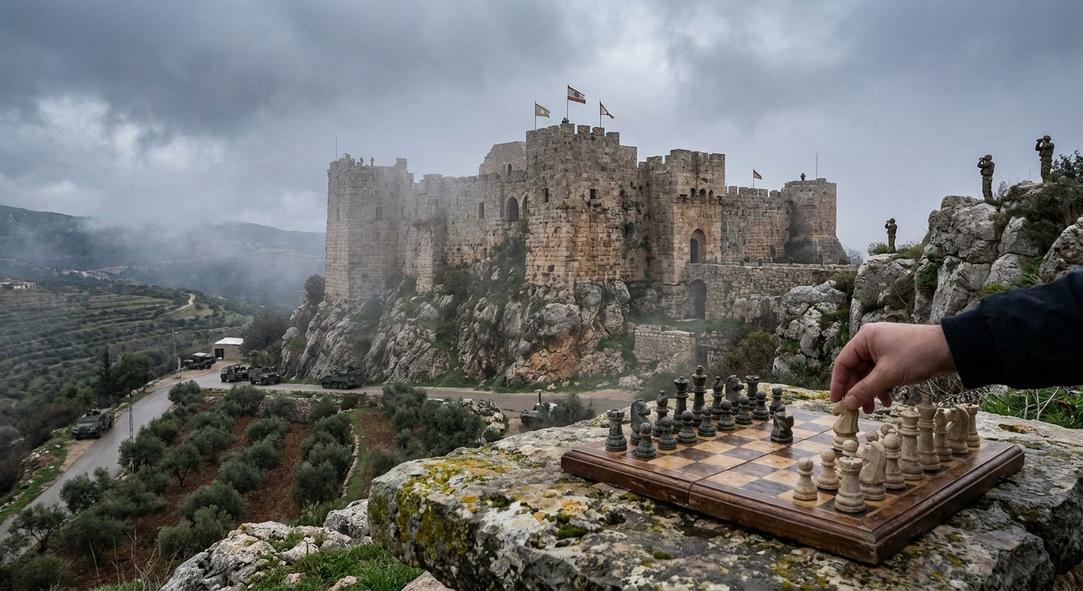
Israel Seizes Castle in Lebanon: A Chessboard of Contradictions 🏰⚔️
In an audacious move reminiscent of medieval conquests, Israel’s recent seizure of a castle in Lebanon has reverberated through the corridors of international politics with the subtle grace of a marching band 📯. Is the age-old phrase “an eye for an eye” the new modus operandi in a world where diplomacy often resembles a blindfolded chess game?♟️
The Echoes of Historical Shadows
The capture of the castle, nestled against the Lebanese landscape like an ancient kingpin, stirs a paradoxical surge of nostalgia and unease. The use of a medieval fortress as a linchpin in modern military strategy offers a unique window into the timelessness of territorial power struggles 🕰️. How do we reconcile this strategic choice with the era of drones and cyber warfare? Does it not highlight the “antithesis” between historic and contemporary forms of power?
According to the International Institute for Strategic Studies, Israel’s military expenditure has grown by approximately 8.5% annually over the past decade, reflecting a broader pattern of heightened military investments in the region. Such figures suggest more than mere doubling down on security; they gesture towards an intricate dance of deterrence and defiance.
Intriguingly, the Israeli force’s advance into Lebanon also conjures images of an era where castles were less about defense than dominance. This “return to roots” resonates oddly in a world that seems ever-obsessed with forward momentum.
A Castle and Its Political Folly
To label the acquisition merely a military maneuver would be to dismiss the deeper currents at play. Much like opening Pandora’s Box 📦, the implications ripple far beyond the initial act. Political rhetoric dances around the flames of this development, with each nation unfurling its narrative like the sails of a great ship caught in a sudden squall ⛵.
Furthermore, the castle’s capture sits like a jagged piece on the geopolitical jigsaw, one which pundits and diplomats alike hesitate to place. How will Lebanon’s fragile ethers of sovereignty withstand such a brazen gesture? Do we witness a saga etched in contrasts—where a fortified relic of history becomes the stage for modern conflict’s unfolding drama?
The Human Element: Mirrors of Ambiguity
Amidst these strategic theatrics, one must pause to consider the human factor 🤔. For the people paddling the turbulent waters of conflict in this region, every political advance is like a shadow that lingers far longer than its cause. What is to be made of lives intersecting at the confluence of ancient stone and contemporary spectrums of war? A castle is seized, indeed—but who, in reality, holds the key to its fate? Is it not the silent witness to a conflict raging both outside and within?
As images of the castle’s imposing silhouette drape the screens of the world, its stone walls stand as both guardian and condemned of a conflict that refuses to age into obsolescence 🕸️. Herein lies the irony: while the walls remain the same, the battles fought around them evolve with the passing seasons of human frailty and resilience.
Contemplation Beyond the Ramparts
Whether this bold maneuver shall pave the way for peace or merely etch another cycle into the annals of historical grievances remains as elusive as ever. In geopolitical chess matches, the capture of symbolism-laden territories—like castles—strikes a dissonant chord against aspirations for reconciliation 🔔.
Amidst these unfolding events, one truth is stark: the castle’s stones, while mute, speak volumes. They remind us to peer through the veil of political theatre into a deeper, more nuanced narrative—a tapestry where the threads of history and destiny are indelibly intertwined.