
Inside Trump’s Deal With the I.R.S. to Drop His $10 Billion Lawsuit 💼🧾
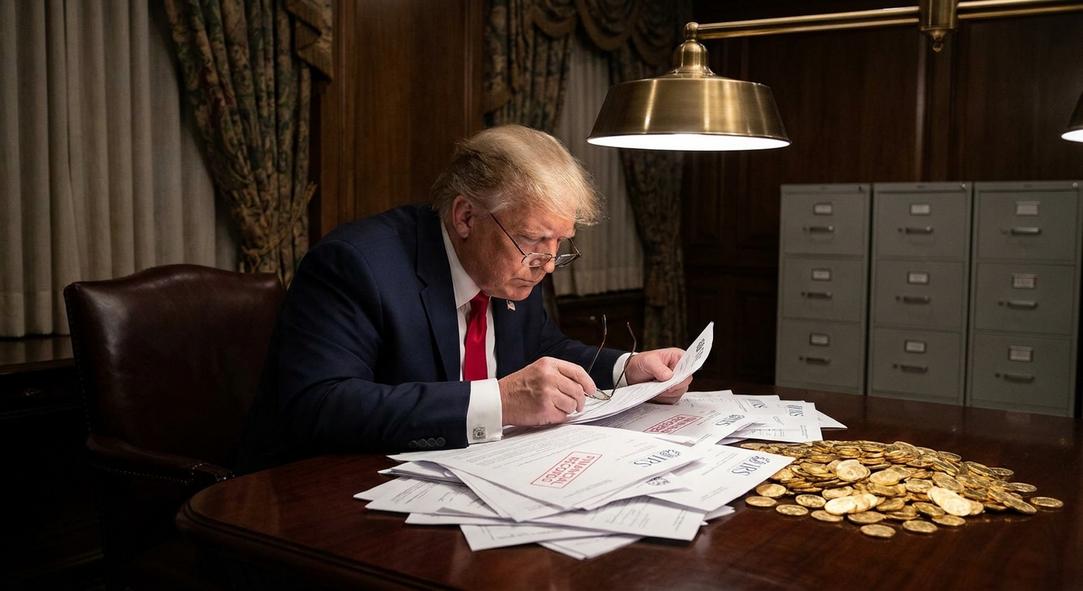
In a nation where the drama of power often mirrors the tempest of our greatest tragedies, former President Donald Trump’s $10 billion lawsuit against the Internal Revenue Service stands as a curious testament to the American theatrical. The grandiose sum, akin to the twinkling treasures of Aladdin’s cave, came head-to-head with the stark, bureaucratic glare of the IRS. This confrontation embodied striking antithesis: a rich spectacle juxtaposed against the grey machinery of government oversight.
The lawsuit, while glittering on the surface, dove into murky waters of tax returns and alleged misconduct. For someone like Trump, whose persona is as enlarged as the skyline, the irony was palpable: a man famed for circumventing tax trivialities now embroiled in a legal dance with none other than the collectors of said dues. Our irony lies not in the lawsuit itself but in the ages-old narrative of greed and governance playing out in modern attire. Government blessings and loopholes, after all, have been unearthed like fossils, embedded within the democratic bedrock.
The Making of a Peculiar Settlement
As negotiations unfurled between Trump’s legal battalion and the IRS, a fascinating chess game played out under the public gaze. The agreement reached—a relinquishing of the lawsuit’s hefty demand—resembled the calm after a ferocious storm. Yet, amid this calm, the paradox of accountability in power lingered: the IRS, a specter many citizens face with trepidation, now stood as an unwitting guardian against potential fiscal overreach. 🤔
The settlement, emerging from whispered discussions and formidable exchanges, underscored a vivid reality: in the realm of politics, outcomes can morph in a manner likened to shifting sand dunes, deceptively silent but changeable with the slightest breeze. Power in compromise, it seems, reflects the impermanence and adaptability of today’s political landscape.
The Broader Implications: Tax, Irony, and Public Trust
What does this peculiar settlement herald for the future? The deal, at its core, reveals a labyrinthine interplay of influence and accountability, akin to the intricate webs woven by industrious spiders. It challenges us to reconsider the symbiotic relationship between the individual and governmental power. Here was a titan of business clashing against the gristmill of democracy—a drama both ancient and new.
Yet, we must ask: does this reinforce public trust or corrode it further? When figures of wealth and influence navigate through loopholes and emerge unscathed, it may inspire as much cynicism as ambition. The American public watches with bated breath, hoping for fairness in a system that appears, at times, as opaque as the fog-laden streets of Victorian novels 🔍.
Lessons in Human Nature and Governance
In this tale of titans and taxmen, what lessons do we derive? Perhaps, it is the evolving nature of power itself, swaying like an ancient tree in a modern storm. The implicit irony in watching a prominent figure square off with institutional rigidity offers a poignant reflection upon the age-old dynamic of resistance against, and eventual submission to, order.
This saga is a reminder that beneath the layers of wealth and influence, there lies a fundamental truth: even those soaring highest in society must, at times, navigate the intricate thorns of governance. Is this the beginning of new harmonies between power and public trust? Or simply another chapter in our ever-churning political narrative? 🌪️