

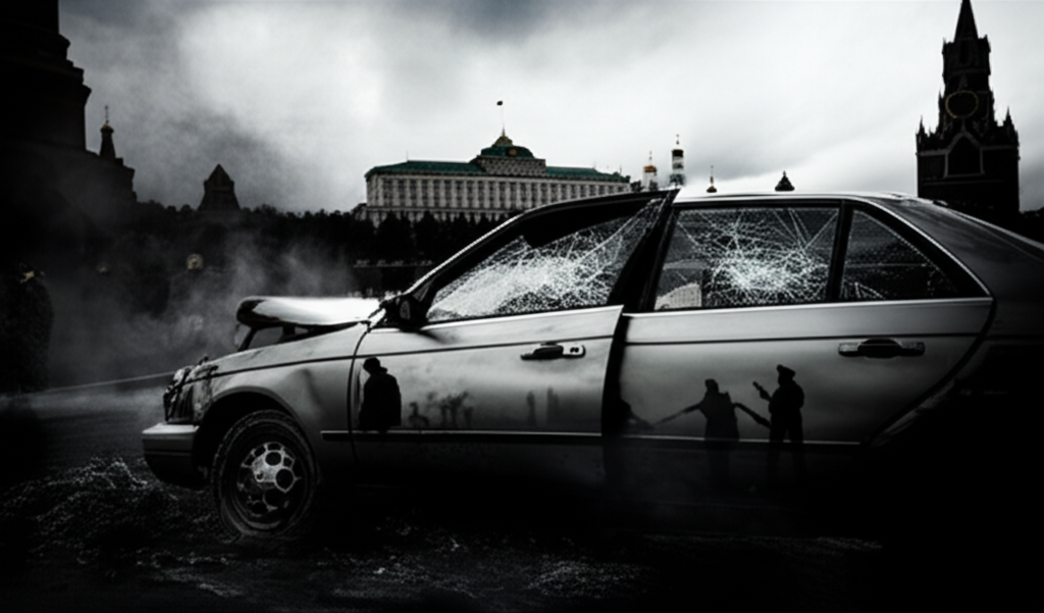
Russian General Is Killed in a Car Bombing in Moscow: Power and Paradox in the Heart of the Kremlin 💥🚗
In Moscow, a city where history clings to every cobblestone and shadows seem to whisper secrets, the sudden death of a Russian general in a car bomb shakes not just government corridors, but the very essence of what it means to wield power in this age. For such a metropolis—where the gleaming facades of the Kremlin and the cracked pavement of the backstreets live in striking antithesis—this act of violence reads like a grim message inked in blood and irony.
How often does a bomb in the capital expose the fragile illusion of security in a regime built on the veneer of invincibility? Moscow is supposed to be the fortress; yet, here lies a brutal reminder that even generals—those who command armies and dictate battles—are as vulnerable on home soil as careless sparks in a dry forest.
Moscow’s Dark Epidemic of Silent Battles
This general, whose identity was confirmed by multiple sources close to Kremlin insiders (though oddly absent from the more sanitized official accounts), was reportedly targeted in an explosion that tore through the cozy stillness of a government district street. It’s tempting to imagine the blast as a random act, the result of some careless driver or a mishandled device. But given Moscow’s recent pattern—where car bombings have morphed from distant theater to unsettling reality—a more sinister choreography is at play.
Hospital corridors where generals and oligarchs meet fates similar to peasants in a brutal novel, suggest a city where political rivalries no longer hide behind curtained whispers but bloom openly in the scary bloom of terrorism and retaliation. This general’s death is less an isolated strike and more a pulse in the relentless fever of internal machinations. Each explosion is a reminder that, beneath the polished veneer of state power, the Kremlin plays a dangerous game of deceit and reprisal.
In Russia’s capital, violence is no longer confined to distant battlefields; it has become a force that crashes into the streets and crests cars like tides against stone. Like a thunderclap on a quiet night, it throws ordinary life into stark relief, exposing fault lines in a society that prides itself on control but grapples constantly with chaos.
Irony Woven into the Fabric of Modern Russian Power
Is it not a bitter twist of fate that a man who orchestrated strategies across battlefields would be felled by an enemy so elusive and invisibly close to home? This event dances with biting irony: a general, emblematic of discipline and order, undone by a tactic that is the language of insurgents and shadow wars. It calls to mind the old Cold War paradox — that the tools of chaos so often emerge within the citadels of order.
The assassination, dripping with metaphor, can be seen as a symbol of Russia’s present geopolitical tension: a state that projects unequivocal strength yet constantly battles ghosts among its own ranks. It’s like watching a ballet with dancers who occasionally trip over their own powdered wigs, reminding the audience that beneath every grand spectacle is human fragility.
Behind the Curtain: What Moscow’s Car Bombings Reveal
One might wonder: what motivates such attacks? Are they barbs in the internecine struggle for influence among oligarchs? A reckoning for military failures? Or dark warnings to those who overstep unseen boundaries? Sometimes, the lack of clarity is the point itself—maintaining an atmosphere where suspicion is as thick as the winter fog.
Indeed, Moscow has witnessed a spate of similar incidents in the past years, each sending ripples through an already stormy political pond. Car bombings have become not just tools of terror, but messages from invisible hands. Like the treacherous currents under a frozen lake, these acts suggest that beneath the city’s shining ice, something dangerously restless churns.
Security experts point out the difficulty in protecting even the most highly guarded figures in sprawling urban environments. It’s reminiscent of an ancient fable where kings, despite their armor and throne, are felled by stones flung from alleys no sentry patrols.
The Human Face in the Fog of War and Policy
Beyond geopolitics and headlines, there’s something achingly human in the tragedy. People behind the titles—fathers, brothers, colleagues—snatched from existence in a moment’s brutal poetry of violence. Civilians nearby recount shattered windows and ringing ears, their mundane Tuesday transformed into a tableau of fear. Sometimes, amidst political chessboards and grand narratives, one forgets that human lives are the pieces — fragile and irreplaceable.
Walking through a park near the explosion site, an old man feeding squirrels laughed and then shuddered. “Here, even the birds don’t sing as before,” he murmured. Moscow’s grim recent history is etched into everyday life; just as the cold wind through the birch trees reminds you how swiftly things change.
What Lies Ahead for a City on Edge?
Will this killing spark a new round of purges? Or tighten an already suffocating atmosphere of mistrust and paranoia? When the front lines of a war are not only foreign soil but the streets right outside the Kremlin’s walls, what hopes remain for stability?
One thing is clear: Moscow’s spectacle of power no longer conceals its fractures. The grandiosity of Kremlin lights juxtaposes with the harsh echoes of violence, like a play where the script keeps changing mid-act. Perhaps, in this paradox, lies the core of Russia’s modern tragedy — a nation perpetually poised between order and chaos, strength and fragility, control and the unpredictable cracks of human ambition.
And so the question lingers, hanging in the smoky Moscow air like an unanswered telegram: in a city where generals die as easily as shopkeepers, who truly commands the stage?